
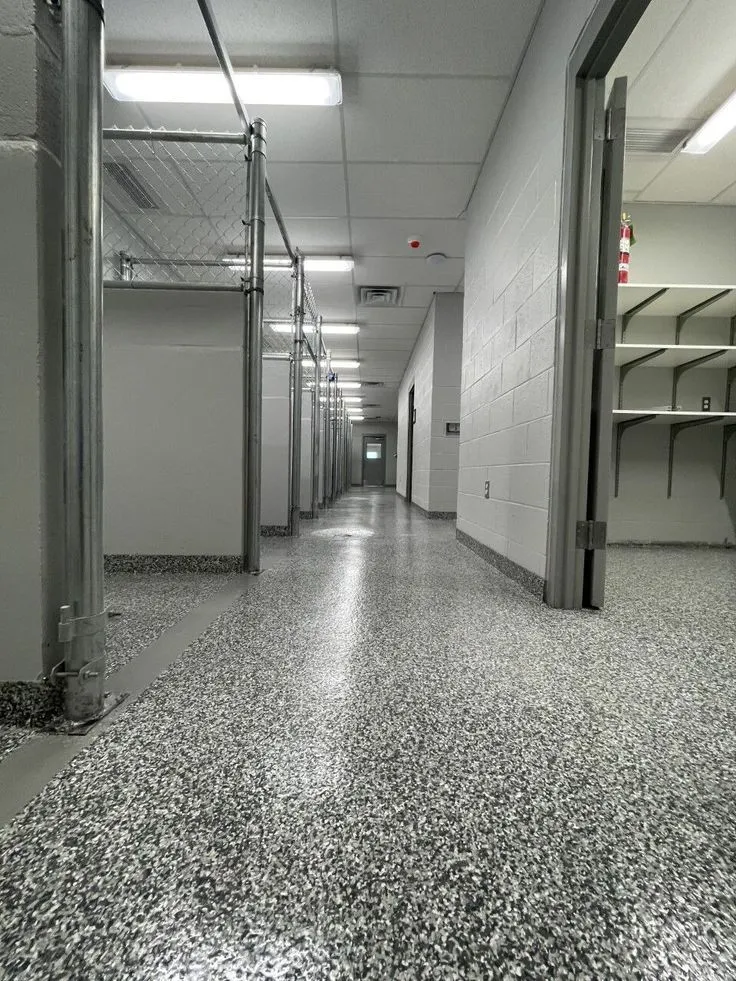
Replacing flooring in an operating veterinary clinic creates challenges that are very different from renovating an empty warehouse. Examination rooms may remain in use, animals can be sensitive to unfamiliar noise and activity, and clinical teams still need clean routes between treatment, recovery, and support areas. One frequently overlooked consideration is dust generated during concrete preparation. Controlling that dust is important not only for housekeeping, but also for maintaining a more manageable environment while flooring work takes place.
Preparation Naturally Creates Dust
A durable resinous flooring system depends on proper substrate preparation. Existing coatings, surface contamination, weak concrete, and other unsuitable materials may need to be mechanically removed before a new system can bond effectively.
Diamond grinding and similar preparation methods can generate fine concrete particles. In a completely vacant industrial building, controlling those particles is still important. In a functioning veterinary environment, however, dust management deserves even closer attention because nearby rooms, equipment, staff, and animals may remain present.
Preparation should therefore be planned as carefully as the coating application itself.
Dust Can Travel Beyond the Work Zone
Fine construction particles do not necessarily remain where grinding takes place. Air movement, doors, employee traffic, and ventilation systems can allow dust to migrate into adjoining spaces.
Facilities considering Veterinary Epoxy Flooring In Nj should ask how preparation equipment is connected to dust-extraction systems and how individual work zones will be separated from active clinical areas.
Mechanical preparation paired with suitable vacuum collection can help capture particles close to where they are generated, reducing the amount of cleanup required beyond the immediate project area.
Phasing Can Protect Daily Operations
Veterinary practices rarely have the option of closing every department at once. A more practical renovation may divide the building into several controlled phases.
For example, a group of examination rooms could be completed while other rooms remain available. Once the flooring has cured sufficiently and the area is cleaned and reopened, work can move to another section.
The sequence should reflect patient flow, treatment requirements, emergency routes, and temporary animal-housing arrangements rather than simply dividing the building into equal areas.
Temporary Barriers Need Careful Planning
Physical separation between construction and clinical zones can support dust management. Temporary barriers, controlled entrances, and clear signage can help limit unnecessary movement through preparation areas.
Staff should know which corridors remain open and where equipment or animals should be redirected. Doors connecting the work zone with occupied spaces should remain closed wherever practical.
This planning also reduces the risk of someone accidentally entering a floor area during coating application or curing.
Equipment Movement Reveals Hidden Conditions
Veterinary rooms can contain examination tables, stainless-steel cages, carts, cabinets, and diagnostic equipment. Moving these items before flooring preparation may expose concrete that has not been visible for years.
Old adhesive, staining, cracks, damaged coatings, or previous repairs can appear beneath equipment. These conditions should be inspected before the new system is installed.
An Independent Epoxy Flooring Contractor In Usa should evaluate the actual substrate rather than assuming hidden sections are identical to open floor areas. Discovering defects early provides more options for proper repair.
Cleanliness Continues After Preparation
Dust collection during grinding is only one part of preparing the room. Fine remaining particles should be removed before primers or subsequent resin layers are applied.
Floor edges, corners, equipment bases, and wall transitions deserve particular attention because dust can settle in tight locations that larger machines cannot easily reach.
A clean, prepared substrate supports better bonding while also making the work area easier to return to normal veterinary use after installation.
Flooring Texture Should Match the Room
Once preparation is complete, the final surface should reflect how the room functions. Wet kennel or wash areas may need more traction than a lobby or consultation room.
Treatment areas can also experience disinfectants, rolling equipment, animal movement, and occasional fluids. The appropriate texture should balance traction with practical cleaning rather than making every section equally rough.
Renovation planning provides an opportunity to evaluate these room-specific needs before the final flooring system is selected.
Communication Helps Reduce Disruption
Clinic staff should know when noise-producing preparation will occur, which rooms will close, and when completed areas can return to service.
Scheduling louder work around quieter operating periods may help reduce disruption. Facility managers should also confirm curing requirements before moving cages, carts, or heavy equipment back onto the surface.
A clear schedule prevents pressure to reopen rooms before the flooring system is ready.
Conclusion
Dust control is an important part of flooring renovation in active veterinary environments because preparation work happens alongside sensitive daily operations. Mechanical grinding, equipment movement, room closures, and curing all need to be coordinated with patient care and facility cleanliness.
A successful project considers more than the finished coating. Effective dust extraction, controlled work zones, phased scheduling, substrate inspection, appropriate texture, and clear staff communication can help veterinary facilities complete necessary flooring improvements while keeping disruption to surrounding clinical areas more manageable.
