
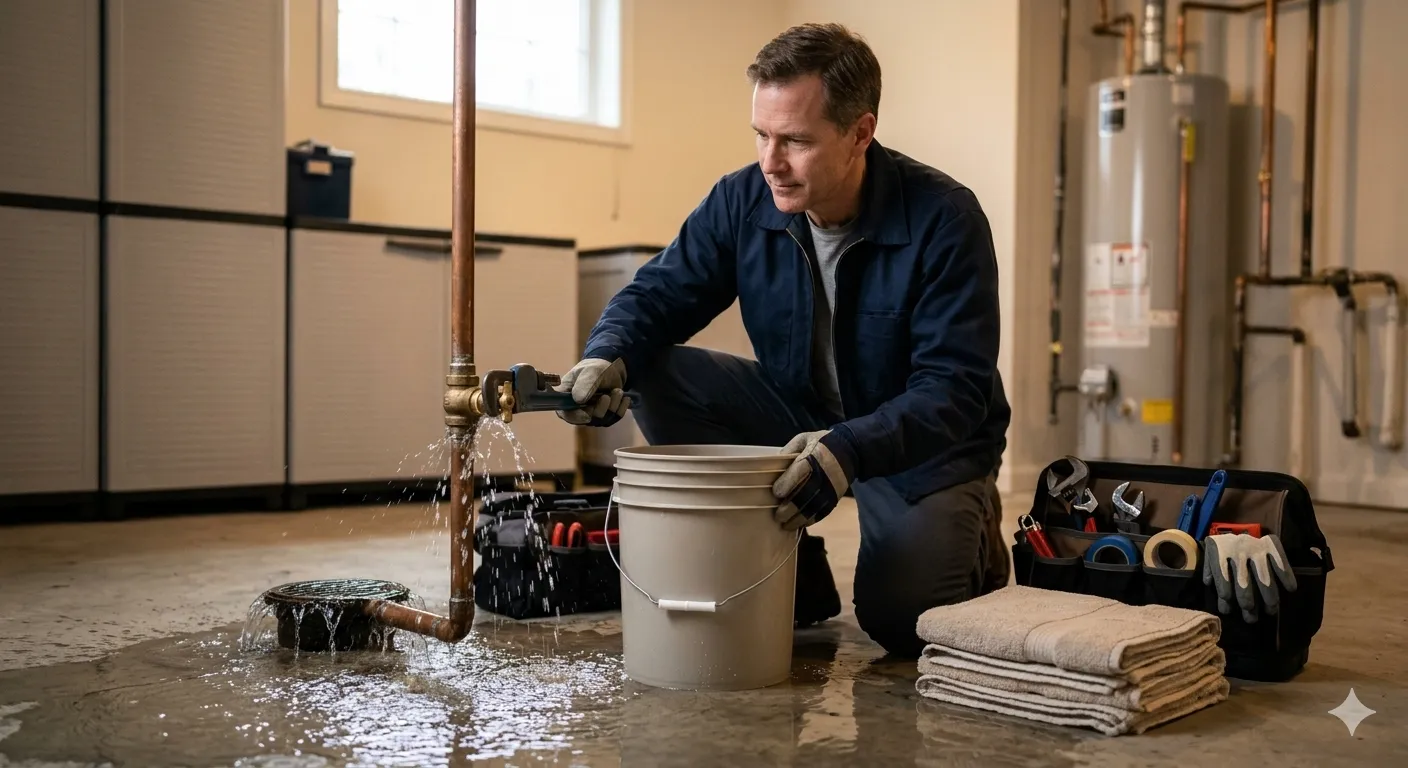
It is two in the morning when a loud crack echoes through the wall, followed by the unmistakable sound of rushing water. Panic arrives instantly, yet the choices you make during the next sixty minutes decide whether the damage stays small or spreads through every room. Having a mental plan beforehand turns chaos into a short checklist. This walkthrough follows a typical emergency in order, so you know exactly what to do, whom to contact, and what comes next. Keep it handy.
Minutes One to Five: Stop the Flow
Your first job is to cut the supply. Find the main shutoff valve, usually near the water meter, in a basement, or along an exterior wall, and turn it fully closed. If a single fixture is leaking, the small valve beneath it may be enough. Then open a low faucet to drain pressure from the pipes. Practicing this once on a quiet afternoon means your hands will remember the motion when stress makes thinking difficult. Speed matters more than perfection at this stage.
Minutes Five to Fifteen: Make the Space Safe
Water and electricity are a hazardous pair. If liquid is near outlets, appliances, or the electrical panel, shut off power to that area only when you can reach the breaker without stepping through standing water. Otherwise, stay clear and wait for professionals. Never wade into a flooded basement with live circuits overhead. If you notice a rotten-egg odor anywhere, leave the property at once and call emergency services from a safe distance. Safety always outranks belongings, so resist the urge to rescue items first.
Who Answers the Phone at Midnight?
Many companies advertise late-night help, but few staff it properly. A true 24/7 Emergency Plumber puts a live person on the line, dispatches a fully equipped technician, and quotes a clear arrival window rather than vague promises. Save a reliable number in your phone before trouble starts. Calling around in a panic often means paying a premium to someone unfamiliar, whereas a pre-selected contact already understands the region and the types of buildings in it. Preparation costs nothing and saves precious time.
What to Tell the Dispatcher
Clear information speeds everything up. Describe where the water is coming from, whether you have shut off the main, and how long the leak has been running. Mention the age and type of your home, plus any fixtures involved, such as a water heater or a toilet supply line. Provide an accurate address and a callback number, and note anything blocking access. These details help the team bring the correct parts and arrive prepared to solve the problem in one visit.
While You Wait: Limit the Damage
Waiting time is not wasted time. Move rugs, electronics, and cardboard boxes away from the wet zone, and lift furniture onto blocks or foil if possible. Use towels and a mop to guide water toward a drain, and set out buckets beneath active drips. Take photographs of everything from several angles. These small actions reduce flooring losses and create a visual record that supports any insurance claim you may decide to file afterward. Stay out of affected rooms if ceilings sag or bulge noticeably.
When the Technician Arrives
Expect a calm assessment before any tools come out. A professional will confirm the shutoff, locate the failure, and explain whether a temporary repair or a full replacement makes sense. Ask for an estimate in writing before approving major work, and request that damaged sections be shown to you. A good visit ends with the water restored safely, the work area tidied, and a clear explanation of anything that still needs attention. Ask questions freely; reputable professionals welcome informed customers.
After the Crisis: Paperwork and Prevention
Once the immediate danger passes, call your insurer promptly and share your photographs and the repair invoice. Ask the plumber what caused the failure, whether similar weak points exist elsewhere, and how to avoid a repeat. Corroded fittings, high water pressure, and aging supply lines are common culprits. Scheduling a follow-up inspection within a few weeks lets you correct underlying weaknesses calmly instead of waiting for the next midnight surprise. Keep every receipt and report together in one folder for easy access later.
Be Ready Before the Next Emergency
Emergencies rarely announce themselves, but preparation changes how they unfold. Know your shutoff valve, keep important numbers saved, and document everything that happens. When trouble strikes, Definitive Mechanical answers around the clock for homes and businesses throughout Maryland, DC, and Northern Virginia, backed by licensed master plumbers and experience with gas as well as water systems. A steady plan and a trusted team make the longest night much easier to survive. Preparation, documentation, and the right contact together turn panic into progress.
