
Understanding how Ipe weathers
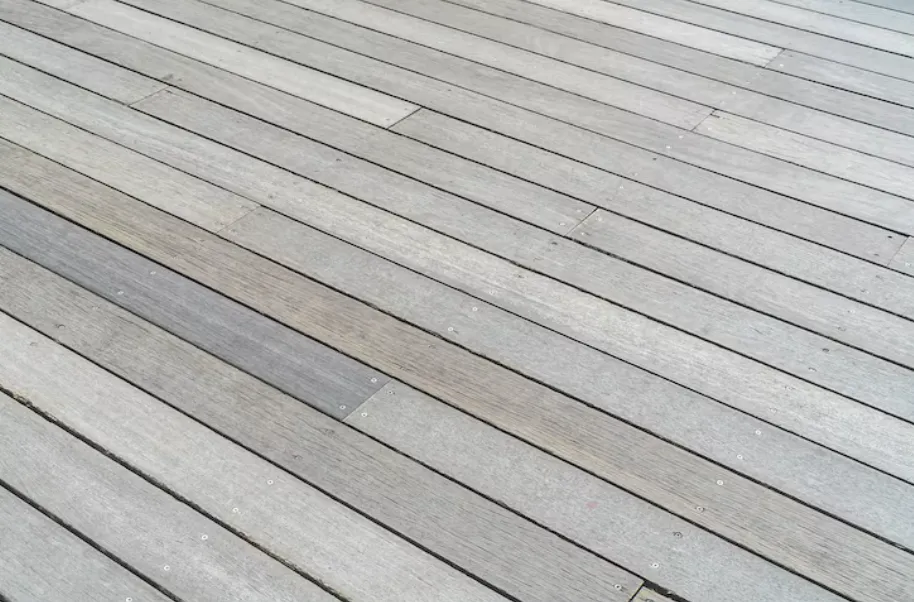
Ipe is one of the few decking materials that performs correctly with zero maintenance. Left untreated, it weathers from its original reddish-brown to a consistent silver-gray over two to three seasons. That silver is a surface phenomenon — the wood beneath is structurally unchanged, and an oiled finish can be reintroduced at any point to restore color.
The decision to maintain the natural color or allow the silver patina is purely aesthetic. Neither choice compromises the structural integrity of the deck. What does cause problems — checking, surface cracking — is inconsistent maintenance: oiling one season, skipping two, then oiling again. That inconsistency creates uneven moisture absorption and accelerates surface checking.
Annual cleaning: what works and what damages
Ipe responds well to low-pressure washing (below 1,500 PSI) with a deck-appropriate cleaner. High-pressure washing above 2,000 PSI raises wood fibers and creates surface roughness that traps dirt and moisture. Bleach-based cleaners will lighten the wood but also damage the wood’s surface cells — avoid them.
For ipe wood decking that has been allowed to silver, an oxalic acid-based brightener can restore the warm tone before oiling. Apply according to manufacturer instructions, rinse thoroughly, and allow the deck to dry completely — typically 48 to 72 hours in dry conditions — before applying oil.
Oiling: product selection and application
Use a penetrating hardwood oil — not a film-forming finish. Film finishes (polyurethane, spar varnish) sit on the surface of Ipe rather than penetrating it, and they peel. Once peeling starts, removal is labor-intensive and usually requires sanding. Penetrating oils absorb into the wood, protect from within, and can be reapplied without stripping.
Apply oil with a brush or roller in the direction of the grain. Work in manageable sections — 50 to 100 square feet at a time — and wipe off any excess that has not absorbed within 20 to 30 minutes. Excess oil that cures on the surface becomes tacky and attracts dirt.
Inspecting fasteners and structure
Annual maintenance is also the right time to inspect fasteners and the deck structure. Look for any stainless screws that have backed out slightly — this can happen in the first two seasons as the wood completes its moisture equilibration. Re-seat them if needed.
Check the end grain of boards at the perimeter — this is the most moisture-vulnerable area and the most likely to show early checking. End grain sealer applied at installation slows this process, but if checking is visible, a penetrating epoxy consolidant can stabilize the fibers before the check propagates.
For product questions, installation support, or to reorder materials for a deck extension, visit ipewoods.com or call 844-674-4455. Ipe Woods USA supports its products long after the initial order.
Ready to spec the right wood for your project?
Visit ipewoods.com or call 844-674-4455
