
A clothesline is a simple household purchase, but the wrong choice can become frustrating very quickly. A frame that takes up too much space, awkward line heights or poor placement will be noticed every time another load comes out of the washing machine.
Australian homes also differ considerably. A coastal balcony has different needs from a suburban backyard or small townhouse courtyard. Rather than choosing purely by size or appearance, it is worth considering construction, location and everyday washing habits.
Start With the Conditions Around Your Home
Outdoor equipment has to cope with sun, rain, wind and regular exposure to moisture. Over time, these conditions can affect frames, joints and other components.
Location makes a difference as well. Coastal environments may expose outdoor equipment to conditions that differ from those in sheltered inland areas. Look carefully at the materials, finish and overall construction instead of judging durability from appearance alone.
Look Beyond the Country-of-Origin Label
There are good reasons why households may prefer locally manufactured products, but origin should not be the only consideration.
When comparing an Australian made clothesline, check how its design fits the space available. Look at frame dimensions, usable line capacity, construction and whether the layout will work with the household’s normal washing routine.
Even a well-built product can become inconvenient when it is too large for its surroundings. A clothesline should leave enough room for people to move around it comfortably.
Think About What You Actually Wash
Product descriptions often focus on dimensions and line length. Households, however, think in terms of towels, work clothes, school uniforms and bedding.
Consider an ordinary week. If several loads are normally washed on Saturday, more simultaneous drying space could be useful. Someone who washes smaller loads throughout the week may not need the same capacity.
Large items deserve particular attention. Sheets consume line space quickly, while wet towels are heavier than everyday clothing. Buying around these regular loads makes more sense than planning for the biggest wash imaginable.
Make Sure It Is Comfortable to Use
A clothesline needs space around it as well as underneath it. Someone has to carry a basket to the line, reach the pegs and move from one end to the other.
Measure the proposed area and then walk around it. Check whether nearby gates still open and whether the line would interfere with paths, garden furniture or children’s play areas.
Height is another small detail that becomes important through repetition. Hanging washing should feel comfortable rather than requiring an awkward stretch every few minutes.
Be Careful With the Word “Best”
Searching for the best clothesline Australia may produce plenty of recommendations, but there is no single answer for every household.
A renter might value a portable design that can move to another property. A homeowner with a dedicated drying area may prefer a permanent setup. Someone with a narrow courtyard could prioritise compact dimensions over maximum capacity.
The useful question is therefore not “Which clothesline is best?” but “Which design solves the problems in this particular home?”
Check Installation Before Ordering
Installation is easy to overlook while comparing products online. Yet it can determine whether a particular model is practical for the intended location.
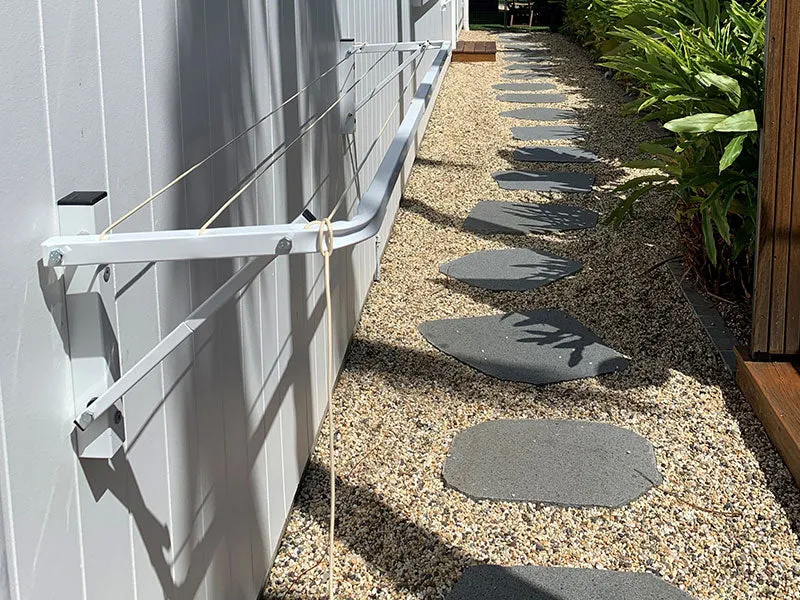
Wall-mounted options require an appropriate surface and suitable fixings. Ground-mounted designs need enough room and a secure base. Portable variants are not permanent installations but do need a flat surface when in use.
Check these requirements before ordering rather than discovering them when the clothesline arrives.
Plan for Days When the Weather Changes
Even a carefully positioned outdoor clothesline cannot guarantee good drying weather every day.
Having a simple backup helps. A covered patio or portable indoor option may provide enough space for urgent clothes during a wet period. Indoor drying should still allow reasonable ventilation and spacing between damp garments.
The backup does not need to match the capacity of the main clothesline. It only needs to keep everyday laundry manageable until conditions improve.
Conclusion
Choosing a clothesline involves more than comparing line length. Construction, available space, installation, weather exposure and normal washing habits all affect whether a product remains convenient over time.
Australian households comparing locally suited drying solutions and different configurations can explore the available options through balconyclothesline.com.au.
