
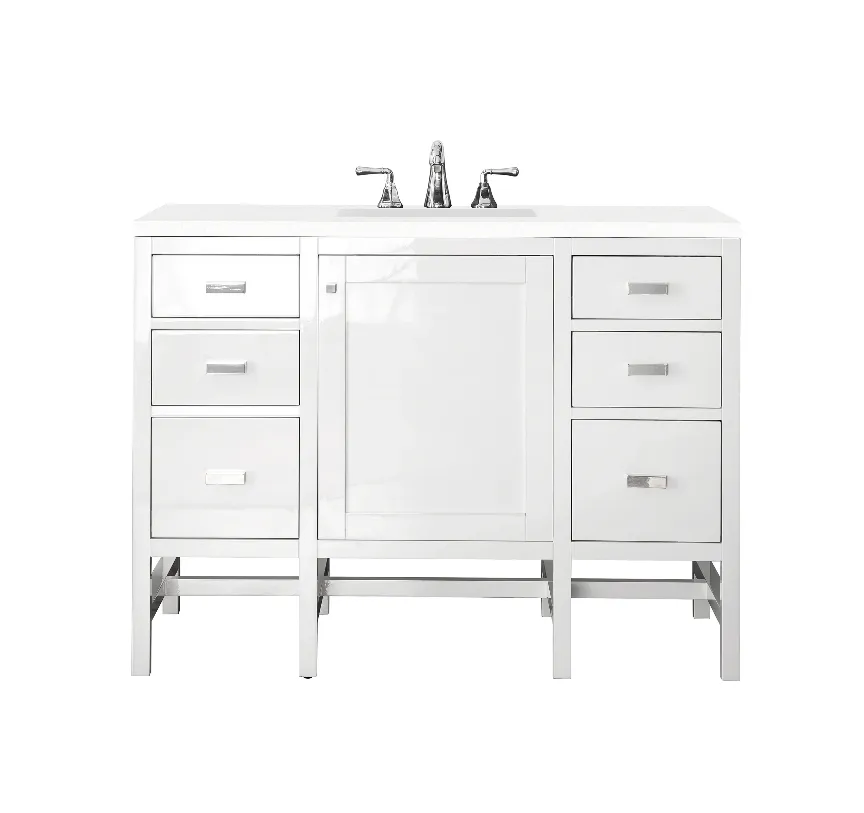
Bathroom furniture faces demands that ordinary household cabinets rarely encounter. Repeated exposure to humidity, frequent cleaning, and daily use can gradually affect materials, finishes, and hardware. This makes cabinet construction an important consideration when planning a bathroom renovation.
A solid wood bathroom vanity may appeal to homeowners seeking natural materials and substantial cabinetry. However, purchasing decisions should involve more than recognizing an attractive wood finish. Construction quality, environmental conditions, and maintenance requirements all deserve careful evaluation.
Understanding What Solid Wood Construction Means
The term solid wood describes components made from natural timber rather than wood fibers or veneers bonded to a manufactured core. However, furniture described as solid wood may still contain other materials in selected components.
Some manufacturers combine solid wood frames with plywood panels or engineered drawer bottoms. These construction choices can serve practical purposes, including dimensional stability and efficient manufacturing.
Buyers should therefore review detailed product specifications instead of relying exclusively on marketing descriptions. Understanding which components use each material provides a clearer picture of the cabinet’s construction.
Wood species, finishing methods, and assembly techniques can also influence performance. Two cabinets with similar appearances may behave differently over years of bathroom use.
Why Bathroom Humidity Requires Special Attention
Wood responds naturally to changes in moisture levels. When humidity increases, timber can absorb moisture and expand. As conditions become drier, it may contract.
Manufacturers account for this behavior through construction methods and protective finishes, but environmental control remains important. Excessive humidity can contribute to swelling, sticking doors, or deterioration of vulnerable surfaces.
A properly functioning bathroom exhaust fan helps manage moisture generated by hot showers. Homeowners should also address plumbing leaks promptly rather than allowing water to remain around the cabinet.
Regular attention to ventilation is generally more effective than waiting until visible damage develops.
Looking Beyond the Cabinet Exterior
A vanity can have an impressive exterior while containing features that require closer inspection. Drawers, hinges, joints, and interior surfaces often reveal more about everyday functionality.
Smooth drawer movement matters because bathroom storage is accessed frequently. Soft-close mechanisms can reduce abrupt impacts, although their presence alone does not guarantee overall durability.
Cabinet joints should be appropriately constructed for the furniture’s intended use. Hardware attachment points and interior supports also affect how the unit performs under regular loading.
Homeowners shopping online can compare product descriptions, dimensional drawings, and manufacturer documentation to identify these details before ordering.
Matching the Cabinet to the Bathroom Layout
Buying a durable cabinet is only beneficial if it fits the intended space. Measurements should account for the vanity’s full width, depth, and height, along with available clearance around adjacent fixtures.
A bathroom with limited floor space may benefit from a narrower cabinet with well-planned drawers. Larger bathrooms can accommodate broader configurations, although storage capacity should be evaluated alongside accessibility.
Existing plumbing may affect whether a cabinet can be installed without modifications. Drawer placement and internal partitions sometimes interfere with drainpipes or water supply connections.
Checking these details in advance can prevent frustrating surprises during installation and help control renovation expenses.
Evaluating Finishes and Surface Protection
Protective finishes play a significant role in preserving bathroom cabinetry. They help reduce direct exposure to moisture, cleaning products, and routine contact.
Different finishes offer varying appearances and care requirements. Painted cabinets create a uniform surface, while stained finishes allow more of the natural grain to remain visible.
Homeowners should follow manufacturer cleaning recommendations because harsh chemicals may damage protective coatings. Even a high-quality finish can deteriorate when repeatedly exposed to unsuitable products.
Pay particular attention to sink edges, countertop seams, and areas near faucets. Water accumulating in these locations should be removed before it can affect surrounding materials.
Considering Long-Term Value Instead of Price Alone
The lowest purchase price does not always represent the best long-term value. Cabinet quality, available storage, hardware performance, and maintenance requirements all contribute to the ownership experience.
A well-designed vanity may reduce the need for additional bathroom furniture. Efficient drawers and shelves can make everyday organization easier without consuming extra floor space.
Repairability also deserves consideration. Replaceable hardware or accessible components may simplify certain maintenance tasks, depending on the product design.
Before committing to a purchase, homeowners should compare dimensions, warranty terms, delivery arrangements, and installation requirements. These factors help reveal the complete cost and practicality of each option.
Conclusion
Choosing bathroom cabinetry requires an understanding of materials, construction, and the conditions in which the furniture will operate. Appearance remains important, but successful purchases also depend on careful measurements, moisture management, and realistic maintenance expectations. Bathroom Vanities Outlet provides collections that homeowners can evaluate while planning a bathroom upgrade focused on both useful storage and lasting visual appeal.
